Publications » Position papers » Sustainable finance taxonomy update
Sustainable finance taxonomy update
Downloads and links
Recent updates
EUROFER welcomes the legislative proposal to mobilise investments in the EU in view of achieving the Paris Agreement and Europe’s 2030 & 2050 climate goals. Achieving these goals will require massive transformative investments for development, demonstration and scaling up of new technologies in a relatively short period of time. Therefore, the proposed EU taxonomy should not hinder innovation and the transition of the European steel industry to climate neutral and circular economy. The issue of up-scaling projects to industrial scale needs to be at the center of ongoing policy discussions, including access to finance, awareness of risks and benefits, long-term
predictable policy frameworks, etc.
By 2050, the steel industry hopes to have shifted from high dependence on fossil energy and raw materials to become a low-carbon energy-based sector integrally part of the circular economy. The aim is, by this time, to emit at least 80% less CO2 compared to 1990 levels. Europe will be a leading provider of low-carbon products, services and technologies worldwide - access to investment will
be key to making this successful.
Download this publication or visit associated links
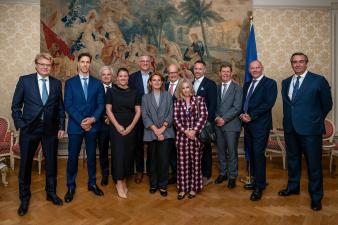
Brussels, 9 September 2026 - 75 years after coal and steel helped lay the foundations for European integration, Europe’s steel industry has called for renewed cooperation with policymakers to build a more competitive and sustainable European Union.
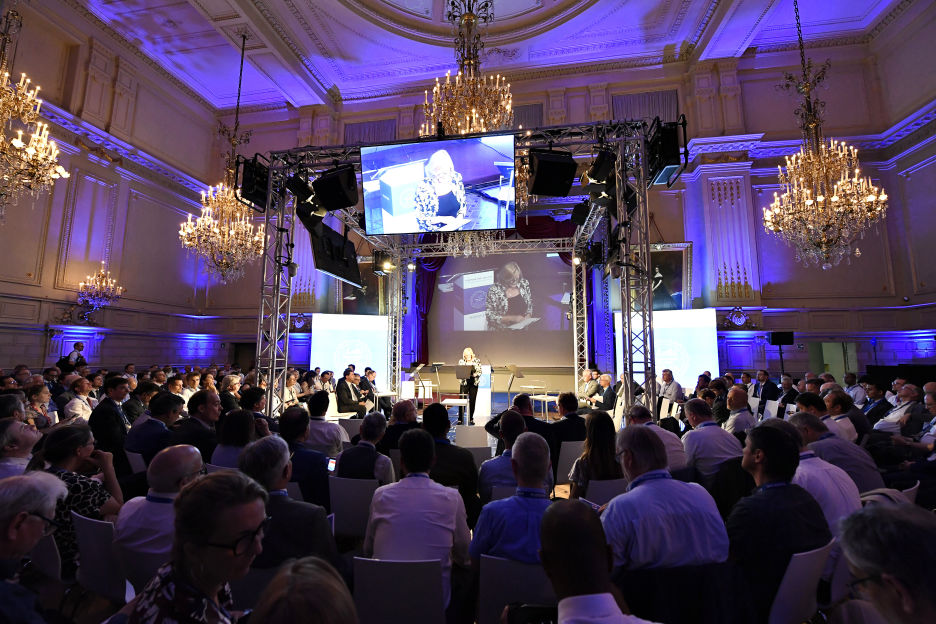
Steel in Action 2026
Brussels 17 July 2026 - Statement by EUROFER Director General Axel Eggert on the European Commission's proposal to revise the EU Emissions Trading System (ETS):
The European Steel Association (EUROFER)
172 Avenue de Cortenbergh
1000 Brussels
Belgium
Email: mail@eurofer.eu
Phone: +32 (0) 2 738 79 20